Exterior works
Foundation repairs
Cracks, moisture or crumbling masonry around your foundation are worth having properly assessed. Novastone repairs and restores residential foundations across Hamilton and the surrounding area.
Your foundation carries the whole house, and it is also the part you see least. Problems tend to show up as small signs first: a crack in the wall, a damp patch, mortar falling out of a joint, a gap where there did not used to be one. Many of these are minor. Some are not. The sensible first step is to have the area looked at by someone who repairs foundations and masonry for a living.
Hamilton homes face a lot of freeze–thaw cycling and road salt, and many were built decades ago. Block, brick, stone and poured concrete all age differently, and a repair that suits one will not suit another. We look at what the foundation is made of, what has happened to it and where water is getting in before we recommend any work.
Some cracks are minor, while others can indicate movement or deterioration. If you are unsure, having the area assessed can help determine what action may be required. Where we think a problem is structural, we will say so plainly and recommend input from a structural engineer.
Warning signs
Some cracks are minor, while others can indicate movement or deterioration. If you’re unsure, having the area assessed can help determine what action may be required.
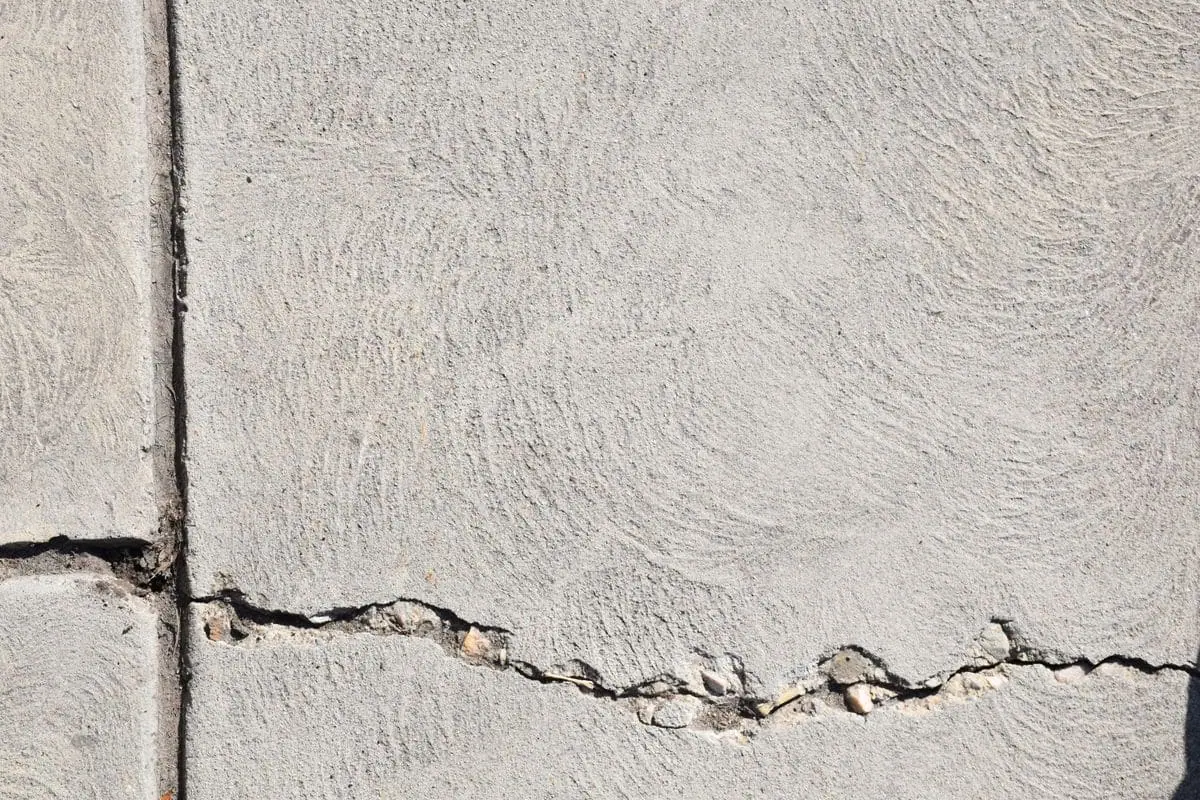
Hairline cracks are common and often cosmetic. Wider, growing or leaking cracks are worth assessing.
Cracks that follow the mortar joints of block or brick in a stair-step pattern can point to movement.
Flaking, spalling or softened brick, block and stone, especially near ground level.
Damp patches, staining, or water visible after rain or snowmelt.
Walls that lean or bow, or sections that appear to have shifted.
Sandy, powdery or missing mortar, and concrete that breaks away when touched.
A persistent damp smell, white mineral deposits (efflorescence) or peeling finishes.
Openings where steps, porches, door frames or windows meet the house.
This is general information, not engineering advice. Every property is different, and an on-site look is the only reliable way to know what is going on.
Below the surface
The weight of the house is carried by a foundation most owners rarely look at.
Footings, foundation walls and the slab, built from concrete, block, brick or stone depending on the age of the home.
Cracks and water entry are among the most common signs. Many are minor; some are worth a closer look.
Crumbling masonry and signs of movement are more reason to have the wall assessed rather than ignored.
We look at the wall, the grade and the water path, and explain the realistic options.
Send photos for a quoteCracks, masonry and mortar repaired, with sealing and drainage details addressed where they apply.
The wall is restored to a sound condition and left tidy, ready to be looked after.
Illustration only. It shows common problems in general terms and is not engineering advice.
Preparing and repairing cracks in poured concrete, block and masonry, using methods suited to the cause.
Replacing or rebuilding damaged block, brick and stone in foundation walls.
Repointing open or failing joints with a mortar suited to the wall.
Restoring spalled or crumbling concrete and parging where the underlying wall is sound.
Exposing the wall where needed and addressing sealing, grading and drainage details around it.
Taking out and rebuilding sections of masonry that cannot be repaired in place.
Call us if you have noticed a new crack, a crack that has grown, water coming in, mortar or masonry breaking down, or a change around a porch, step or wall. Early assessment usually means more options, and photos sent through the form help us tell you what we think before the visit.
Novastone work
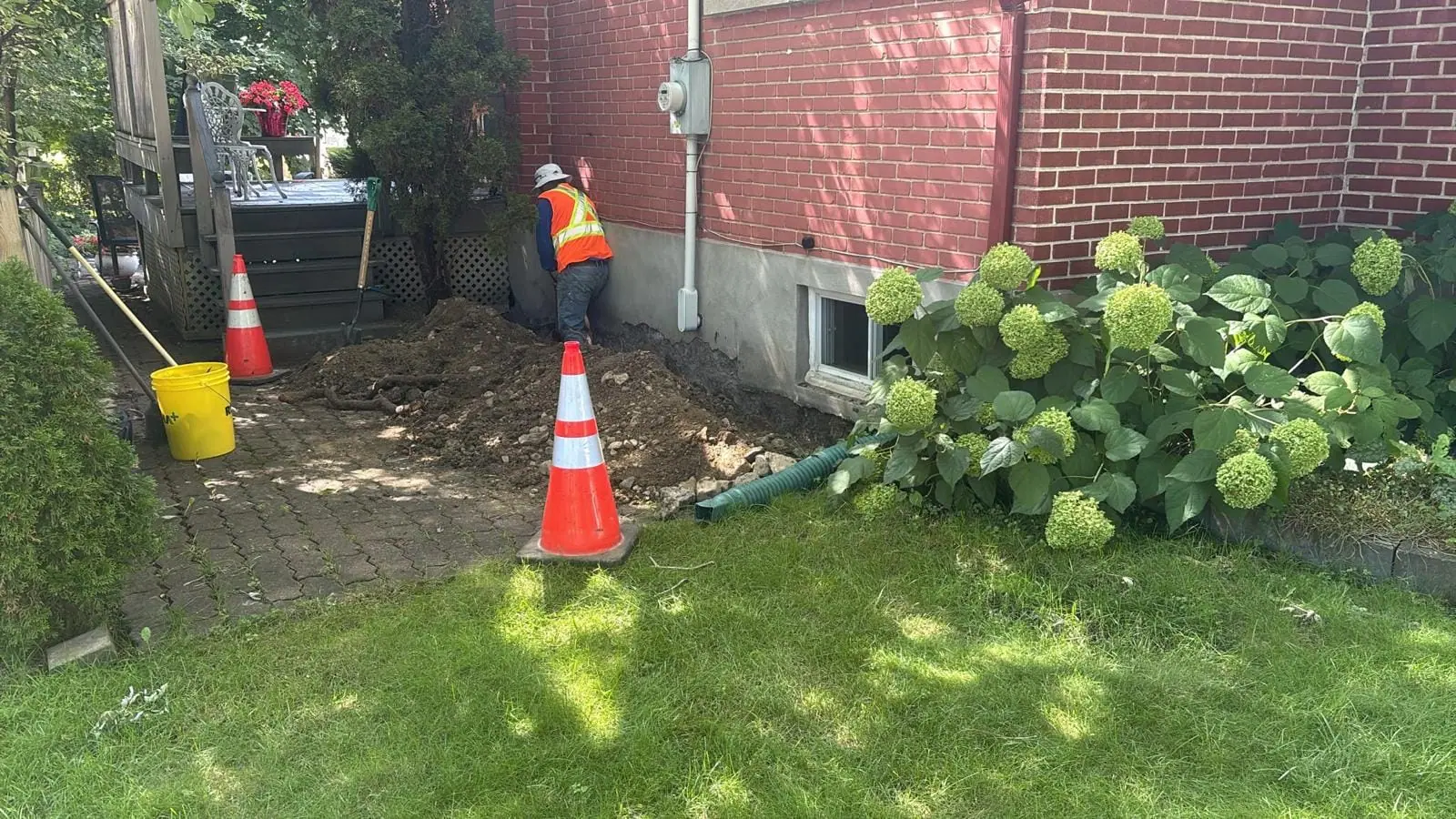
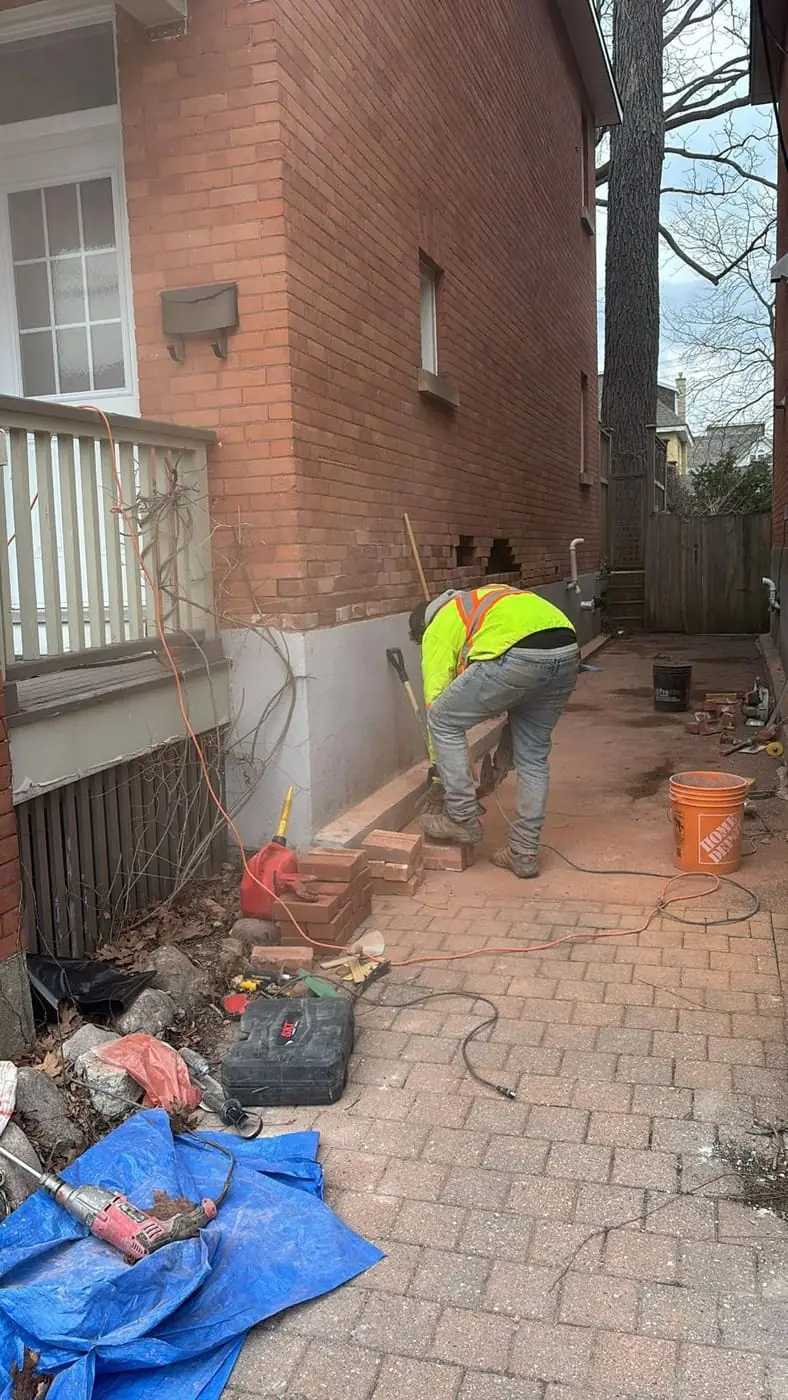
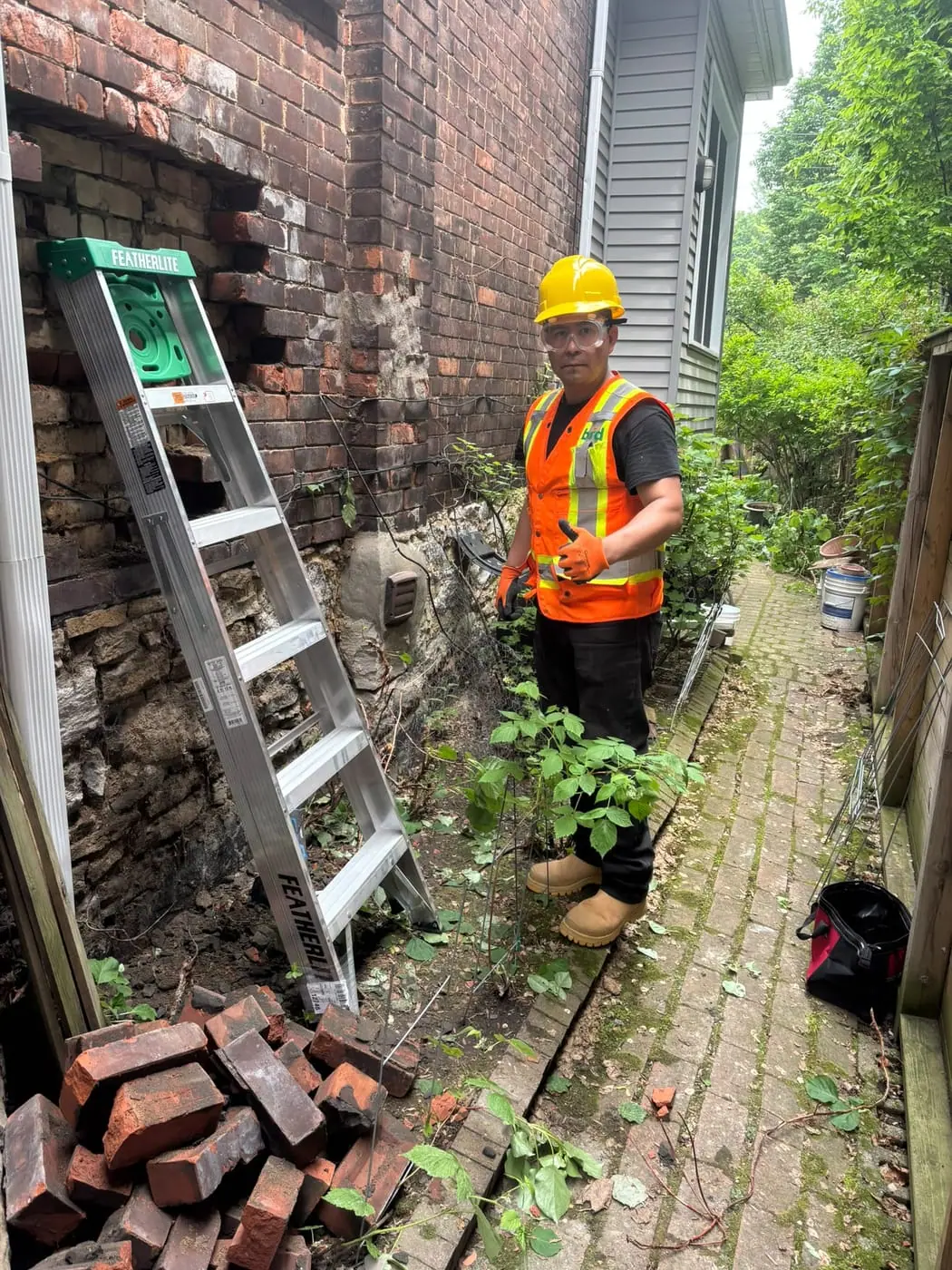
Real Novastone photographs: exposing a foundation wall and carrying out demolition at the base of a house.
No. Many cracks are minor, such as shrinkage cracks in concrete. What matters is the width, the direction, whether it is growing and whether water comes through. An assessment helps separate the harmless from the ones that need action.
Water entry is often connected to the foundation wall, the grade around the house or the drainage details. We look at all three and can carry out the repair and sealing work that suits the situation. If a larger scope or another specialist is appropriate, we will tell you.
Yes, and we encourage it. Use the form below to upload photos of the damage and tell us what you have noticed.
It depends entirely on what is found and the access involved. We give a written quote after seeing the work, and the quote is free.
Cosmetic and localized repairs often do not, but structural work can. We will let you know what we think applies to your job.
Free quote
Send photos and tell us what you have noticed. We will get back to you about a site visit.
Prefer to talk? Call +1 (289) 698-4197